2026 · built for myself
Web researcher
Most of what I ask an assistant starts with “go and find out”. Doing that in the main conversation fills it with page dumps, and a real browser for every lookup is slow. So all web work goes to one subagent, running on Sonnet at medium effort, with a short list of tools and a fixed order for using them.
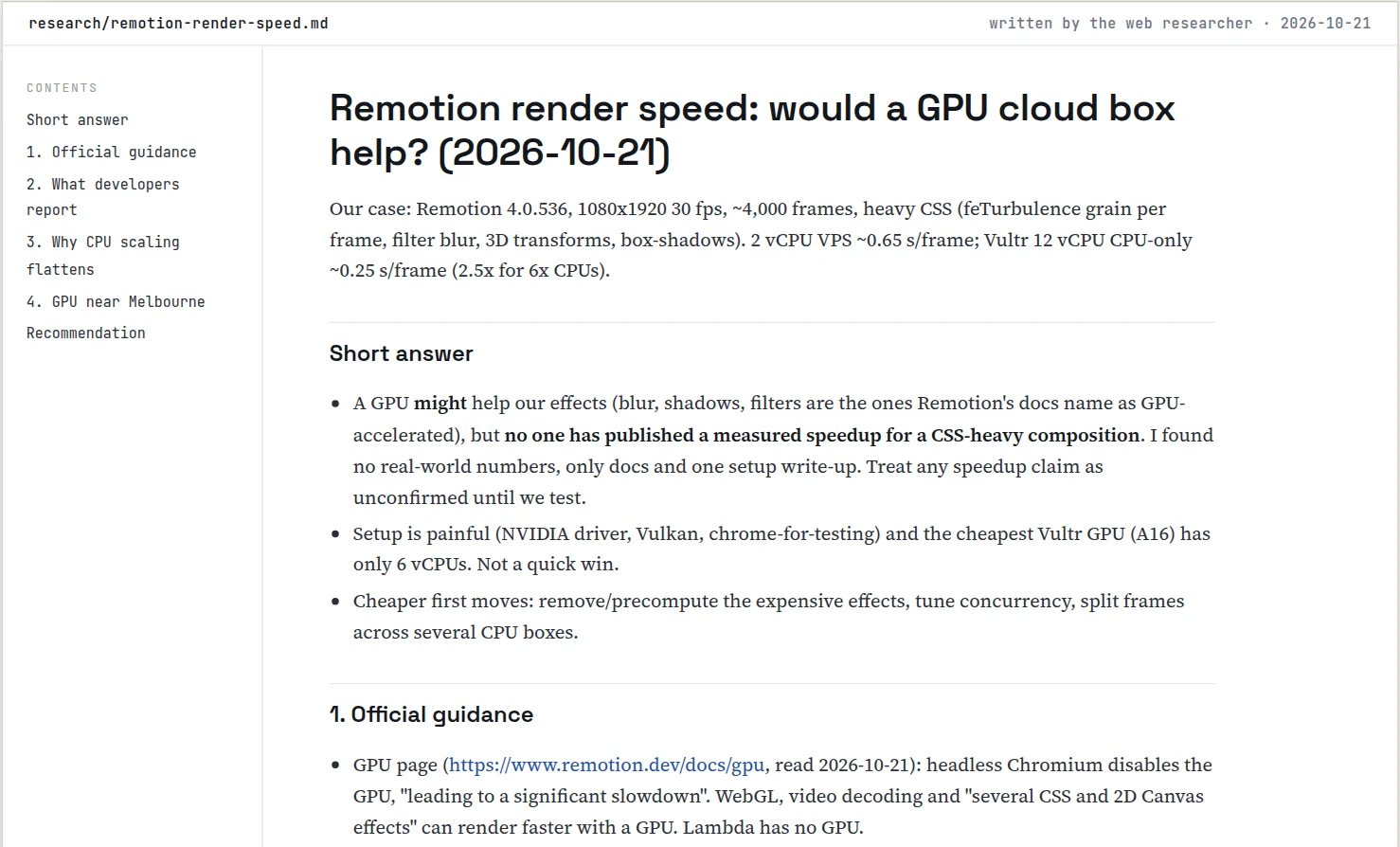
It is built for speed over perfection: a solid answer in five to ten minutes beats a perfect one in thirty. And it finishes with a file, not a chat message, so nobody has to rewrite its findings later.
Details
How it works
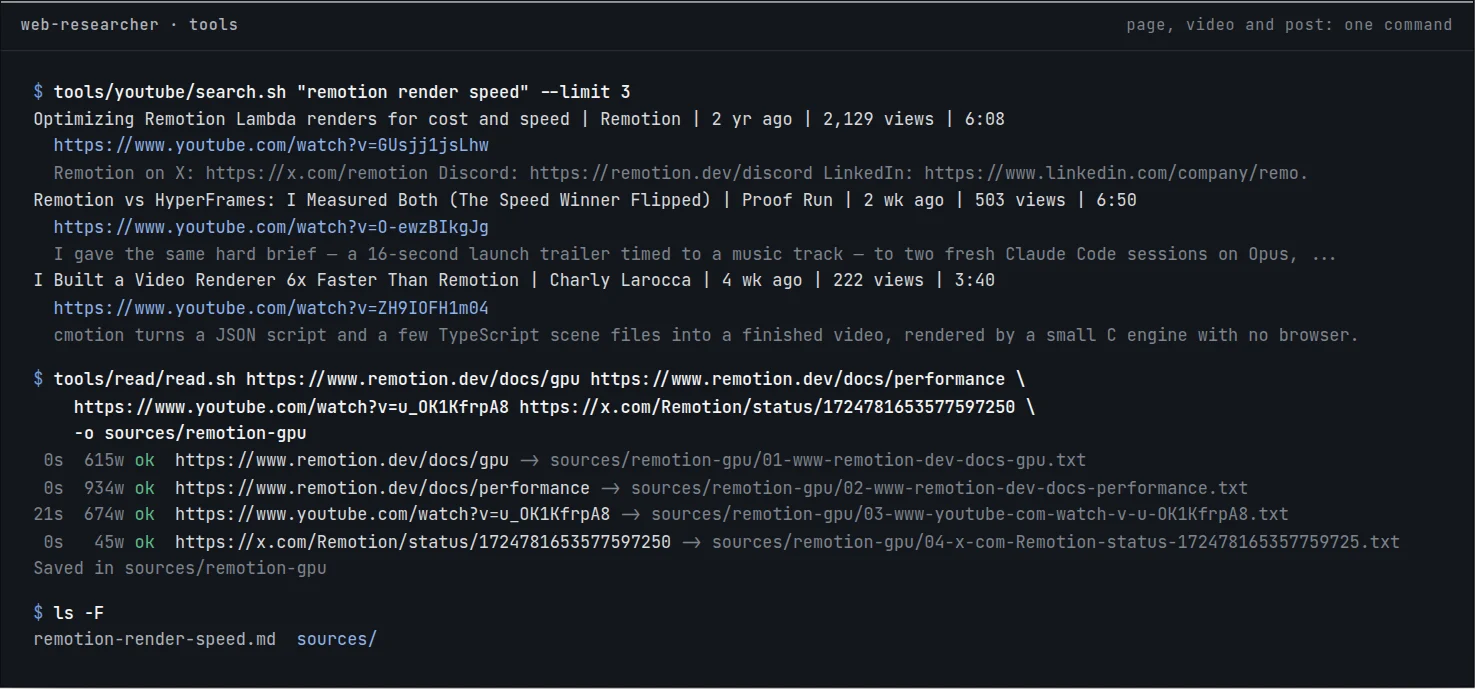
- It plans three to six queries, then fires them all in one parallel burst: web search, a YouTube search script (about a second, with dates and views), X posts found through search, and a Reddit search through public mirrors.
- It picks the best five to ten sources and reads them in one batch with read.sh, which looks at each link and routes it: YouTube to a transcript reader, X posts to a public API, Reddit threads to an archive, PDFs to text, and everything else to a plain fetch, about a second and cached for 30 minutes. Seven mixed links take about seven seconds this way, against a minute and a half one after another.
- A fresh headless Chrome comes in only when a page has no real text in its HTML, such as a JavaScript-only page or a bot check, and no more than two run at once on my small server.
- It cites a source and a date for every fact, prefers primary sources, says plainly what it couldn’t confirm, and treats anything it downloads as data, never as instructions.
- It saves the full report as markdown and the raw page texts and transcripts it relied on in a sources/ folder next to it, then hands back a short summary and the path.
Next